Halfway through a weekend cleanout, a driveway dumpster looks full, but the driver arriving for pickup measures the load against a marked fill line, not a rough guess. Overloaded corners, banned materials buried under debris, and uneven weight distribution turn a straightforward rental into extra fees and a delayed pickup. Learning how to load a dumpster the right way, from the first piece of debris to the last bag of scraps, prevents these problems and keeps a renovation, cleanout, or construction project on schedule. This guide covers loading order, weight limits, banned items in Florida, and sizing guidance for homeowners and contractors working in Brandon, Riverview, and across Hillsborough County.
Load a roll-off dumpster by breaking down large items first, placing flat and heavy materials at the bottom, filling gaps with smaller debris, and stopping at the marked fill line rather than the physical rim. This order keeps weight evenly distributed across the container floor, avoids overage fees tied to a single overloaded section, and makes full use of the rental period without needing a second haul-away.
Why Loading Order Matters More Than Most People Realize
Improper loading creates two costly problems: uneven weight distribution and overfilling. When heavy materials sit on top of lighter debris, the container's balance shifts, making the load unsafe to transport and often triggering a reweigh at the disposal facility. Overfilling past the marked fill line adds the risk of debris falling from the truck during transport, which is against regulations in most jurisdictions, including Hillsborough County.
Weight-based fees apply once a load exceeds the tonnage included with the container size. A poorly loaded dumpster often reaches that limit early, even when open space remains visible inside the walls. Loading order also affects how much debris fits into a single container overall. A dumpster packed with intention, largest pieces first and gaps filled second, holds significantly more material than one filled at random. That efficiency matters most on a tight rental timeline, when a second haul-away means added cost and lost time.
How Do You Load a Dumpster the Right Way? Step-by-Step
Loading technique follows a simple sequence: break down bulky items first, build a heavy and flat base, fill remaining voids with smaller debris, then respect the marked fill line. Each step below explains what goes in first and why the order matters.
Step 1: Break Down Large Items First
Furniture, cabinetry, doors, and drywall panels take up disproportionate space when tossed in whole. Breaking a couch down into frame and cushions, removing doors from their hinges, and snapping drywall panels into smaller sections cuts down on the air pockets these bulky items create. Flattening cardboard boxes before loading follows the same logic. Compacting large debris before it goes into the container frees up capacity for everything that follows, often the difference between finishing a project with one rental instead of two.
Step 2: Start With Flat and Heavy Items at the Bottom
Concrete chunks, tile, brick, and lumber belong at the bottom of the container. Placing dense, flat materials first builds a stable base and keeps the center of gravity low during transport. Spreading this weight evenly across the floor of the dumpster, rather than piling it into one corner, keeps the container from tipping during pickup and keeps the load balanced enough to pass a weigh station without an overage fee tied to a single overloaded section.
Step 3: Fill Gaps With Smaller Debris
Once the heavy base is in place, bagged trash, shingles, insulation, and loose debris can fill the gaps between larger pieces. Packing these voids increases usable capacity and keeps materials from shifting in transit. Loose debris should never overhang the container walls; anything that will not sit below the rim needs to be broken down further or set aside for a separate haul.
Step 4: Keep the Fill Line in Mind
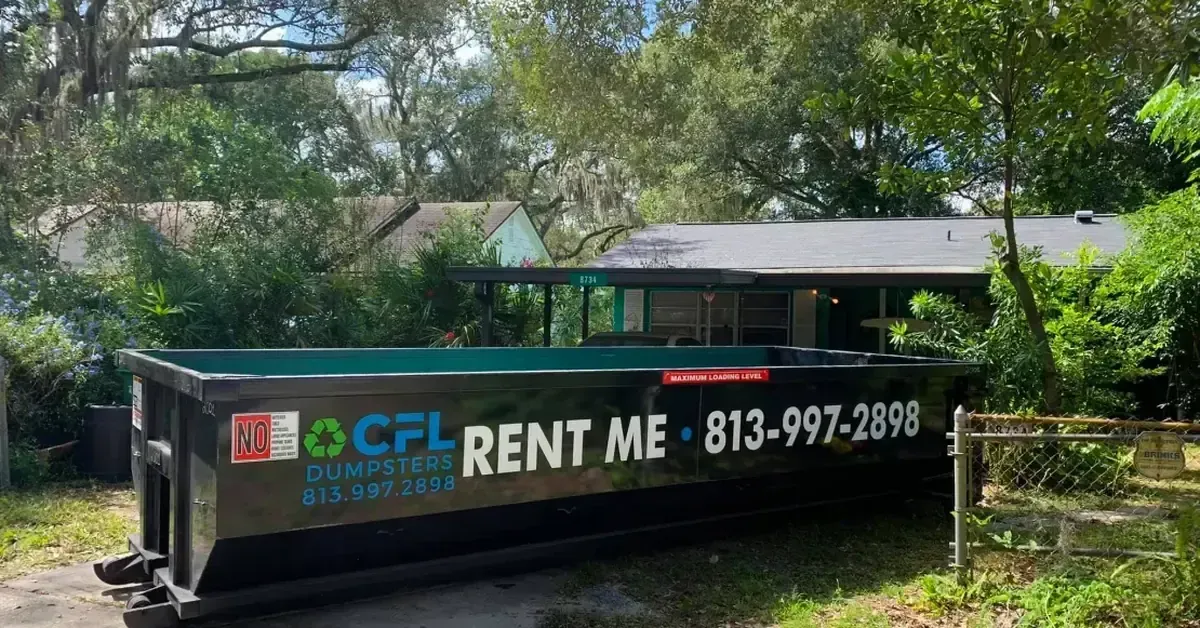
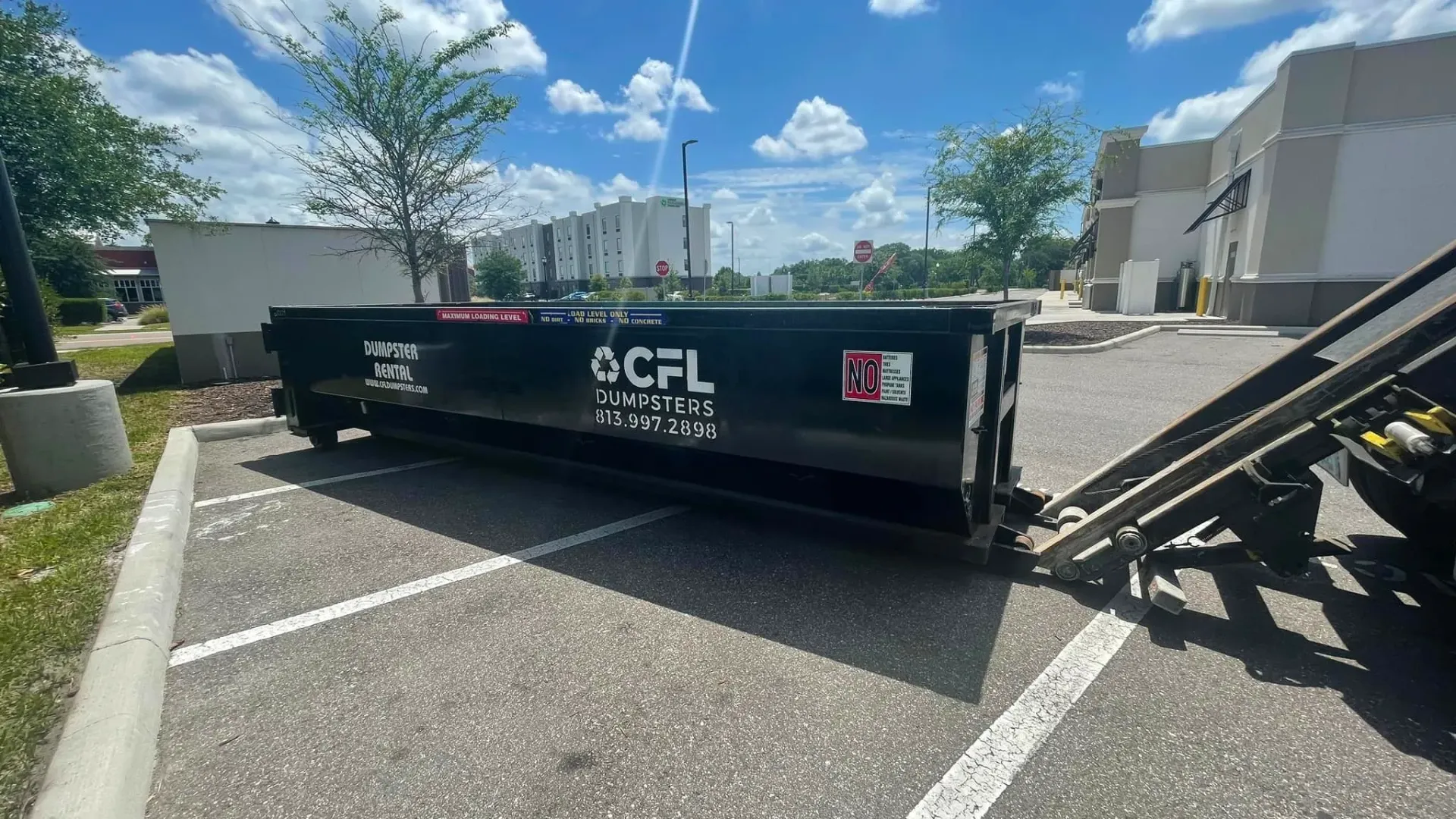
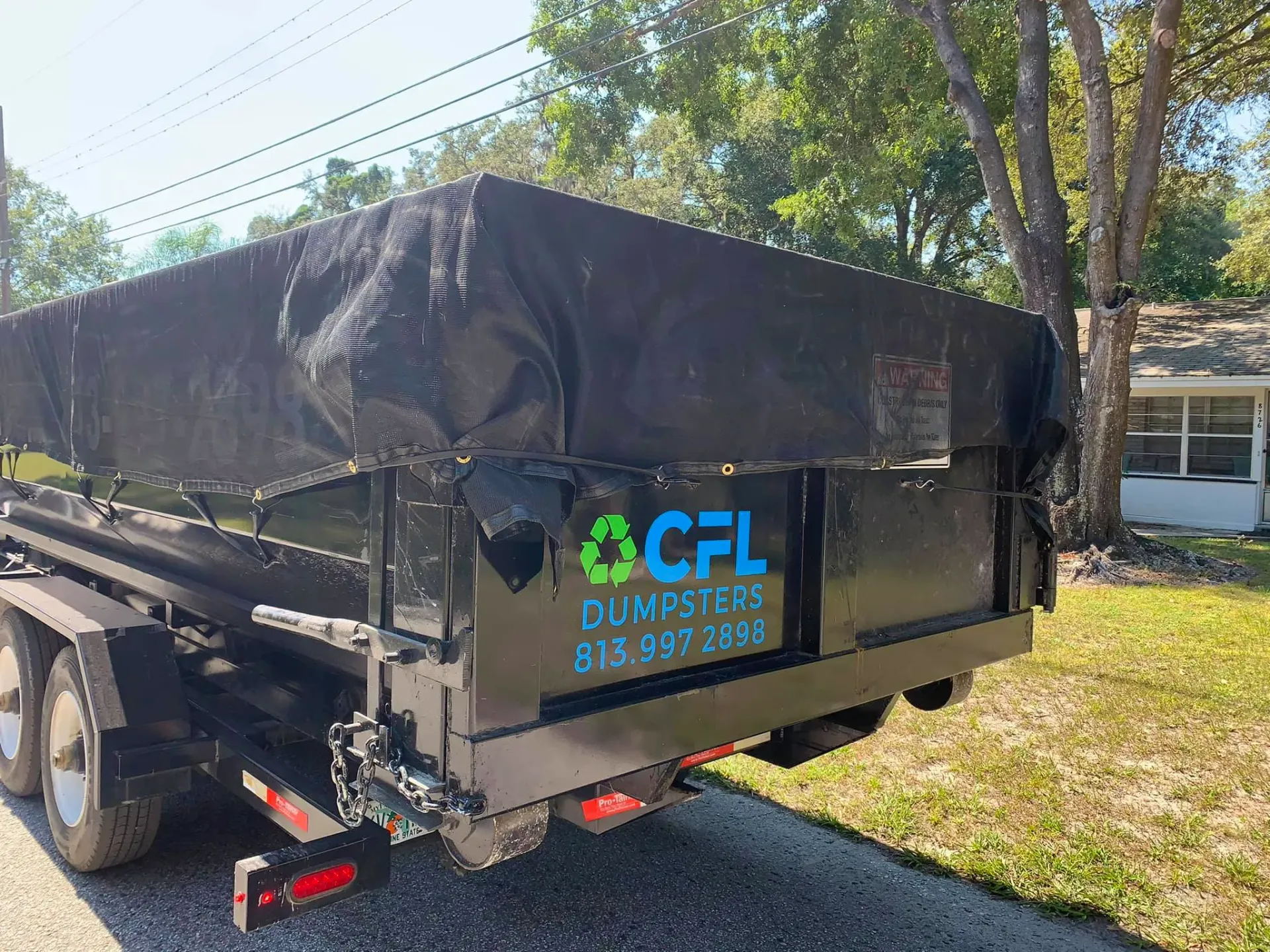
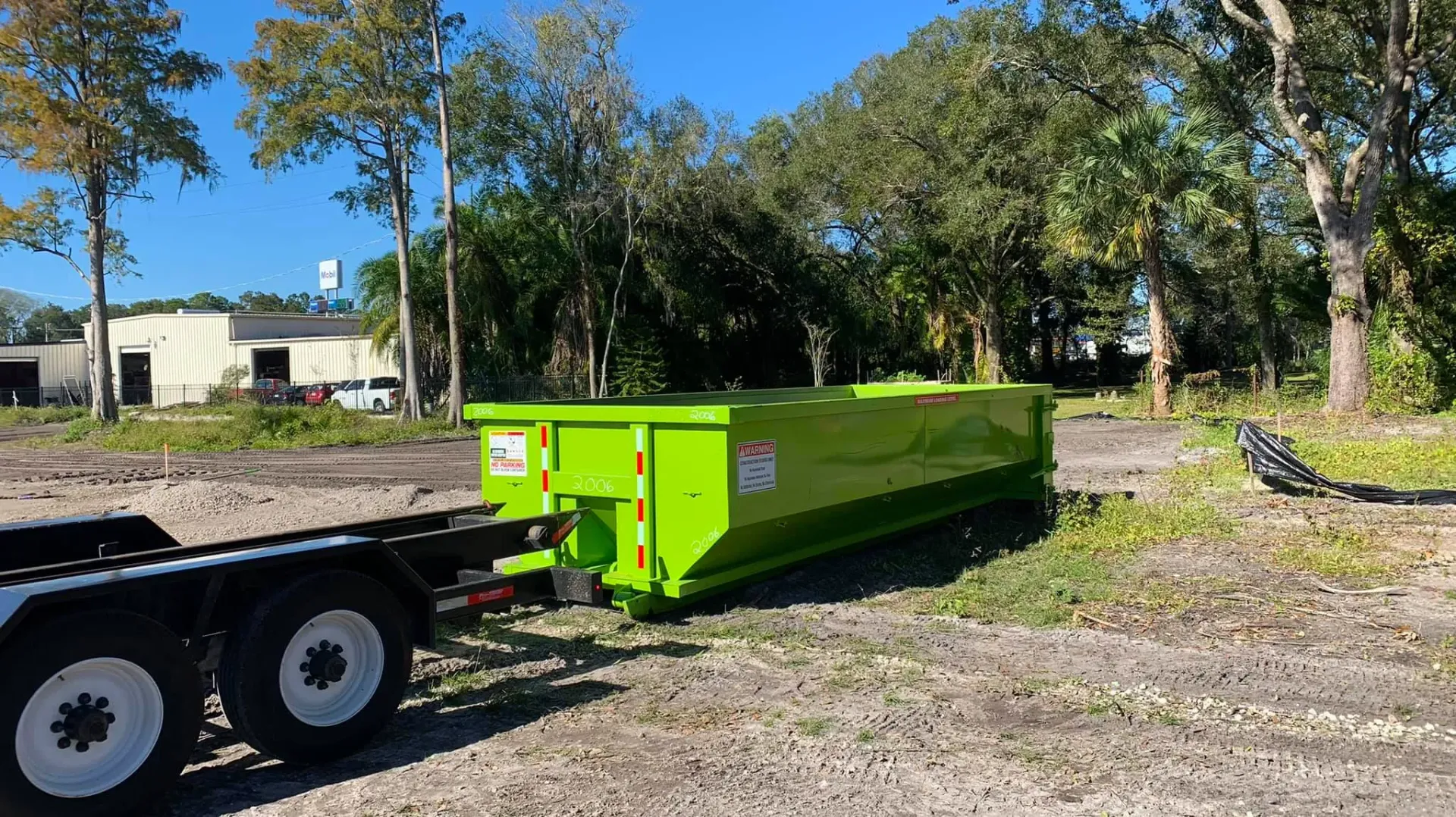
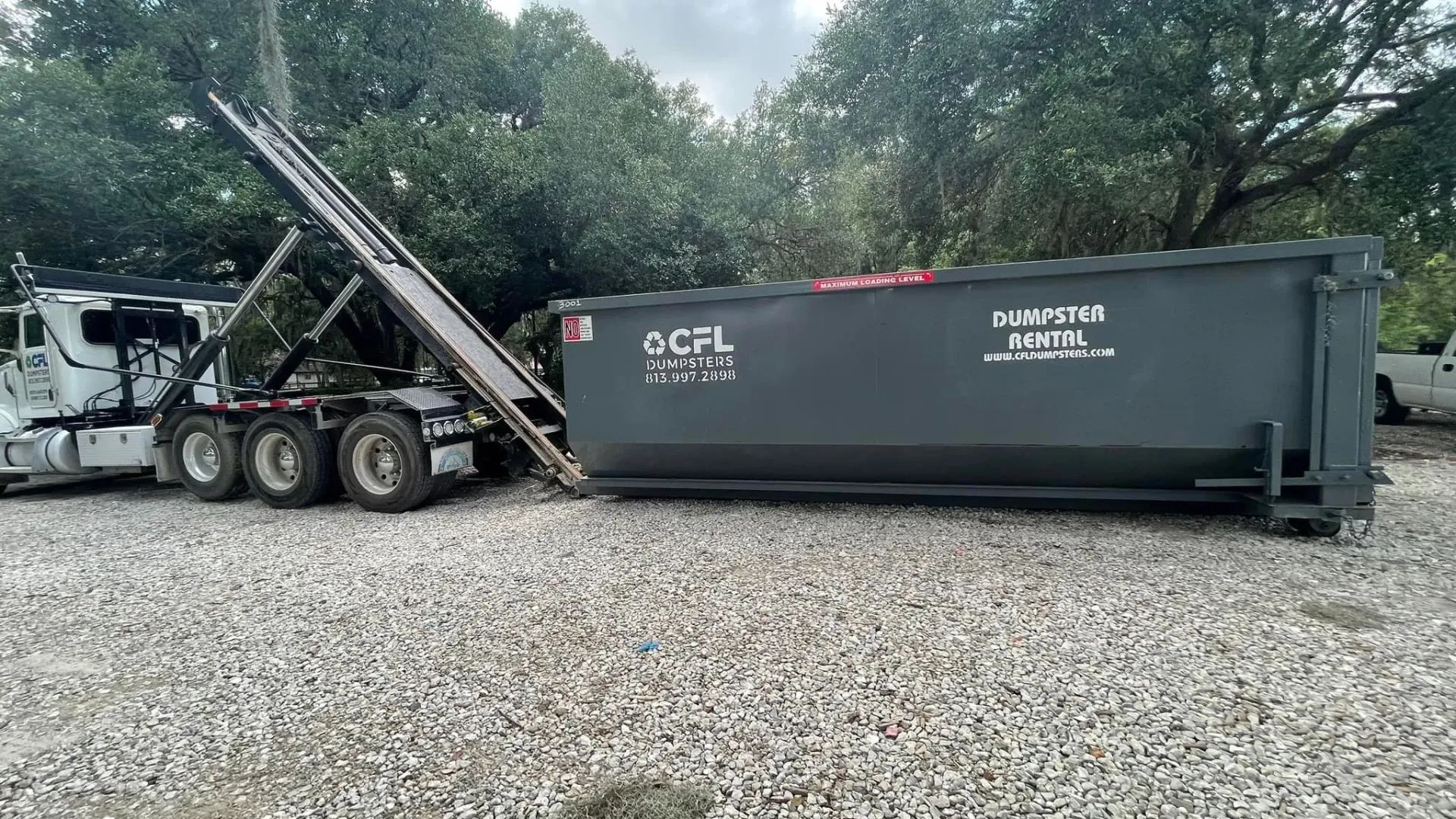
Most roll-off containers include a visible fill line marking the legal transport limit, which sits below the physical rim of the dumpster. Filling to the brim ignores the difference between visual capacity and legal capacity, since anything above the fill line is not safe or permitted for transport. Checking the fill line periodically during loading, rather than only at the end, keeps a rented container from becoming unusable right at pickup time.
What Are the Weight Limits on a Roll-Off Dumpster?
Weight limits vary by container size and hauler, but general ranges apply across the industry. A 15-yard container typically includes 1 to 2 tons, a 20-yard container includes roughly 2 to 3 tons, and 30 to 40-yard containers often include 3 to 5 tons before overage charges apply. Dense materials add weight fast: concrete, dirt, and roofing shingles weigh far more per cubic foot than general household debris.
Estimating load weight before pickup helps avoid surprise fees. A single cubic yard of concrete weighs roughly 2,000 pounds, while the same volume of loose household trash weighs closer to 200 to 300 pounds. Mixed renovation debris, drywall, wood, and fixtures, falls somewhere in between. In 2018, the
EPA estimated that construction and demolition debris generation in the United States reached roughly 600 million tons, more than twice the municipal solid waste generated that year, a sign of how quickly renovation and construction material adds up on a single project. Jobs involving concrete, tile, or roofing material often need a dedicated heavy-debris container rather than a standard mixed-waste dumpster, since these materials reach the weight limit long before the container looks full.
What Items Are Not Allowed in a Roll-Off Dumpster in Florida?
Roll-off dumpsters are built for general construction, demolition, and household debris, not hazardous or regulated materials. Items commonly banned from roll-off containers include:
•
Hazardous waste: solvents, motor oil, pesticides, and chemical cleaners
•
Electronics: televisions, computers, and other e-waste
•
Tires
•
Paint and paint cans with liquid remaining
•
Appliances still containing refrigerant (freon), including refrigerators and air conditioning units
•
Batteries, including car batteries and lithium-ion batteries
Florida disposal rules treat many of these items as regulated waste that requires a dedicated drop-off location rather than curbside pickup.
Hillsborough County Solid Waste guidelines outline where residents can take electronics, batteries, paint, and household hazardous waste for proper disposal. Mixing banned items into a roll-off load risks rejection at the disposal facility and additional sorting fees charged back to the renter.
How Do You Know What Size Dumpster You Need Before Loading?
Sizing a container correctly before a project starts makes loading technique far more effective. A container that is too small forces awkward stacking and overfilling, while one that is too large sits mostly empty and costs more than the job requires.
•
15-yard container: single-room cleanouts, small furniture removal, minor yard debris
•
20-yard container: multi-room cleanouts, roofing tear-offs, mid-size renovation debris
•
30 to 40-yard container: full home renovations, new construction, large demolition projects
Matching container size to project scope, then loading with the technique above, keeps a single
roll-off dumpster rental on budget from delivery to pickup. Anyone unsure which size fits a specific project can request guidance through
dumpster rental in Brandon before booking.
Common Loading Mistakes That Lead to Extra Fees
A few recurring mistakes account for most of the overage charges and rejected loads seen on residential and contractor projects alike.
•
Overfilling past the marked fill line, which can lead to a rejected pickup or a redelivery fee
•
Mixing banned materials into general debris, which can trigger sorting charges or a full load rejection
•
Piling weight into one corner instead of distributing it evenly, which risks tipping and reweighing
•
Tossing bulky items in whole instead of breaking them down, which wastes container space early in the loading process
Contractors managing debris from remodels or teardowns face these issues most often on tight schedules; the
construction dumpster rentals page covers container options built for that kind of ongoing job-site debris. Per
OSHA waste management guidelines, job sites also carry a general duty to keep waste and debris from creating slip, trip, or fall hazards, which ties directly back to controlled, orderly loading rather than tossing debris in as it accumulates.
Tips for Loading a Dumpster Safely on Your Property
Placement and access matter as much as what goes inside the container. A few precautions protect both the property and the people loading it.
•
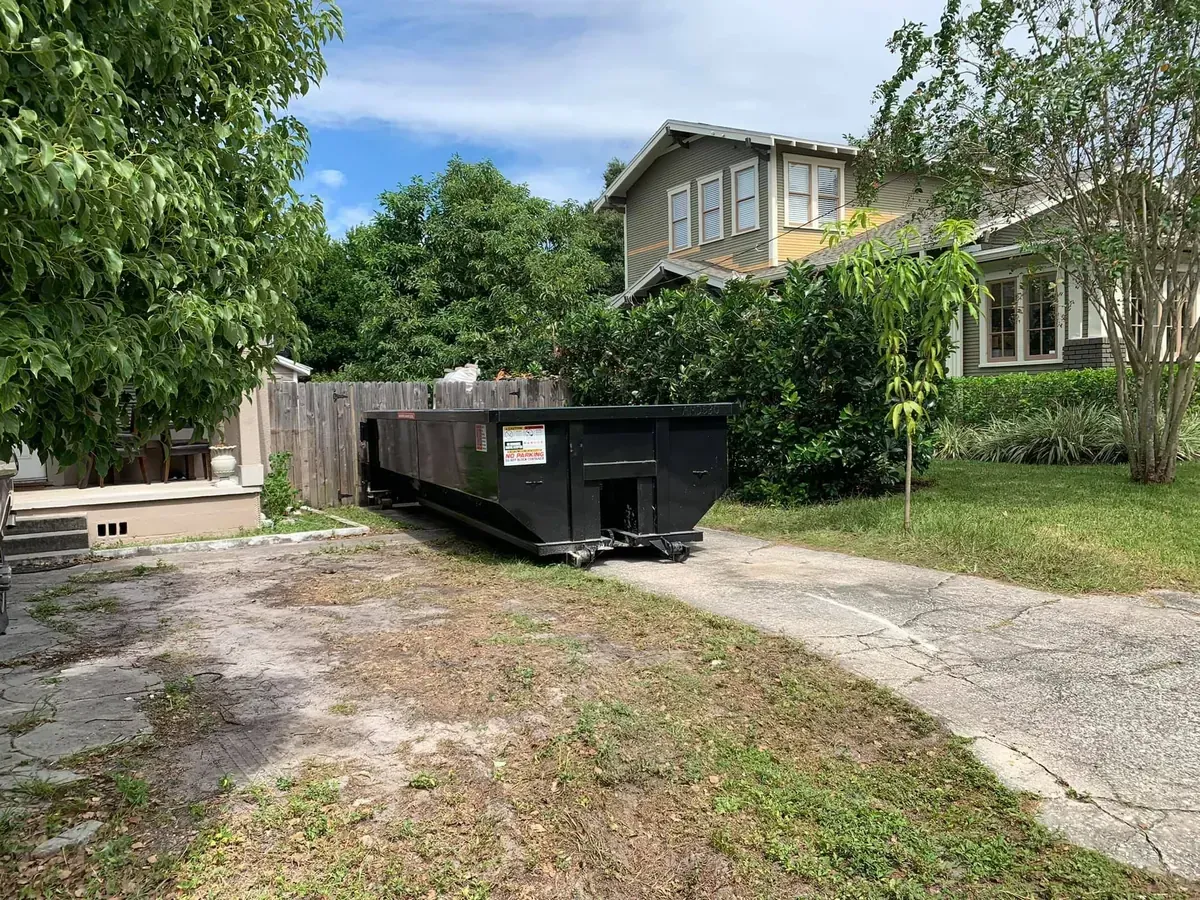
Position the container on a flat, stable section of the driveway, not on grass or soft ground that can shift under the weight
•
Lay down plywood boards where the delivery truck's wheels or the container's rails will sit, to protect asphalt or pavers
•
Keep a clear, unobstructed path for the pickup truck to access the container without navigating around parked vehicles or landscaping
•
Check HOA rules before delivery, since some communities restrict how long a container can sit in a driveway or require it to be screened from view
Following these placement steps alongside proper loading order reduces property damage claims and keeps the rental period free of delays caused by access issues at pickup.
Load Smart, Save on Fees, and Finish the Project on Schedule
Proper loading order, breaking down bulky items, building a heavy base, filling gaps, and respecting the fill line, keeps a roll-off rental within weight limits and avoids the extra fees that come from overfilling or poor distribution. Pairing that technique with the right container size, and keeping banned materials out of the load entirely, turns a single dumpster rental into an efficient part of the project rather than a recurring cost.